Industry / Commercial

Commercial & Entertainment Technology Design

Professional technology should make complexity easier to manage.

Creative Coefficient designs commercial electronics and control hardware around the technicians, installers and operators who depend on it every day — in touring rigs, permanent installations and equipment rooms.

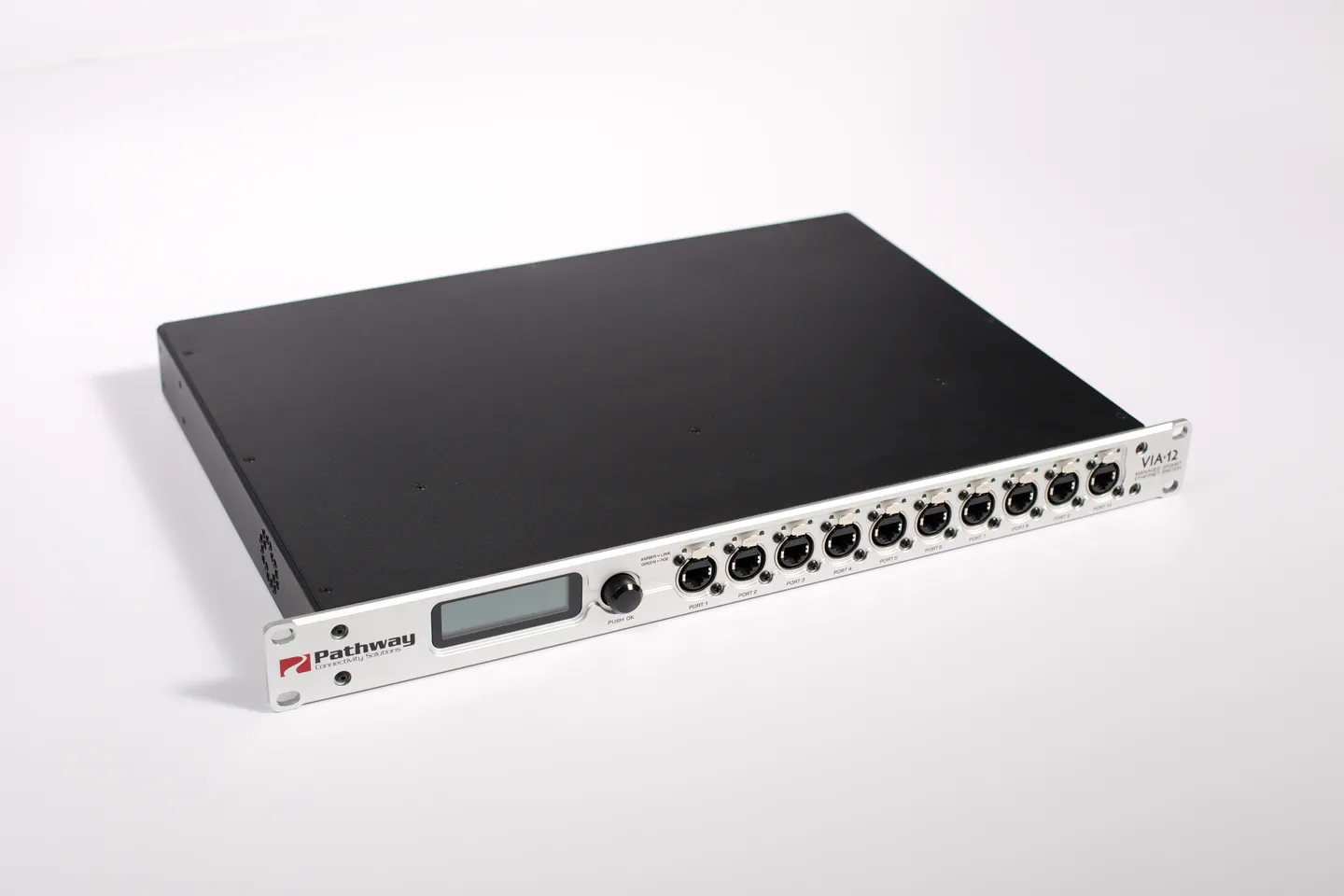
VIA-12 entertainment lighting network switch designed for Pathway Connectivity
VIA-12 · Pathway Connectivity / Acuity
Product types
Rack equipment, network switches, gateways, wall stations, control hardware
Environments
Touring, theatre, permanent installation, architectural, equipment rooms
Relationship
Multi-product program across a single professional lighting product family
Studios
Calgary, Canada and Newcastle, Australia

The Problem

The User Is a Technician Under Time Pressure

Commercial hardware is bought by a specifier, installed by a contractor and lived with by a technician. Only the last of those three is standing in front of it at 2am during a show, reading status indicators in the dark with a torch in their teeth.

Meanwhile the box itself is dense. Ports, network hardware, power, passive cooling and mounting all compete inside a rack unit or a wall box, with no fan noise allowed and no room to grow.

We design professional AV, lighting and control hardware around those constraints: legible in low light, serviceable in place, thermally honest, and consistent enough across a range that a technician already knows how the next product works.

Key Design Problems

What Decides Whether Pro Hardware Gets Specified Again

01

Dense internal packaging

Boards, ports, power supplies and connectors inside a fixed rack or wall envelope, with service access preserved.

02

Rack and wall mounting

Fitting the standards that installers expect, while allowing the same electronics to appear as a rack, surface or wall-box variant.

03

Thermal management

Passive cooling through enclosure design, because fans are noise and noise is unacceptable in most of these rooms.

04

Technician usability and low-light readability

Port identification, status indication and labelling that work in a dark rack, from an angle, at speed.

05

Cable and connector management

Strain relief, bend radius, port spacing for real connector bodies and hands, and a rear face that stays tidy in service.

06

Product-family architecture

Shared extrusions, brackets, trims and interface conventions so each new product costs less to develop than the last.

07

Installation and serviceability

Products that can be commissioned quickly and repaired in place, rather than pulled from a rack that has been cabled for a decade.

08

Manufacturing cost at professional volumes

Sheet metal, extrusion and low-volume tooling choices that suit hundreds or thousands of units, not millions.

Areas of Expertise

Commercial Technology Capabilities

Entertainment lighting technology

Lighting control and network hardware for touring rigs and permanent installations, designed with the people who patch them in mind.

  • DMX hardware
  • Network hardware
  • Touring
  • Permanent install

Professional AV hardware

Rack equipment where the rear face matters as much as the front, and where signal distribution has to survive being re-patched constantly.

  • Rack equipment
  • Ports & status
  • Cabling
  • Thermal management

Architectural controls

Wall stations and installed interfaces that have to look at home in a finished space and still behave like professional equipment.

  • Wall stations
  • Installed interfaces
  • Family consistency

Commercial electronics

Rugged enclosures, passive cooling, serviceability and product architecture for equipment expected to run for years without attention.

  • Rugged enclosures
  • Passive cooling
  • Serviceability
  • Installation

Product Family Thinking

Designing a Product Family, Not Just a Product

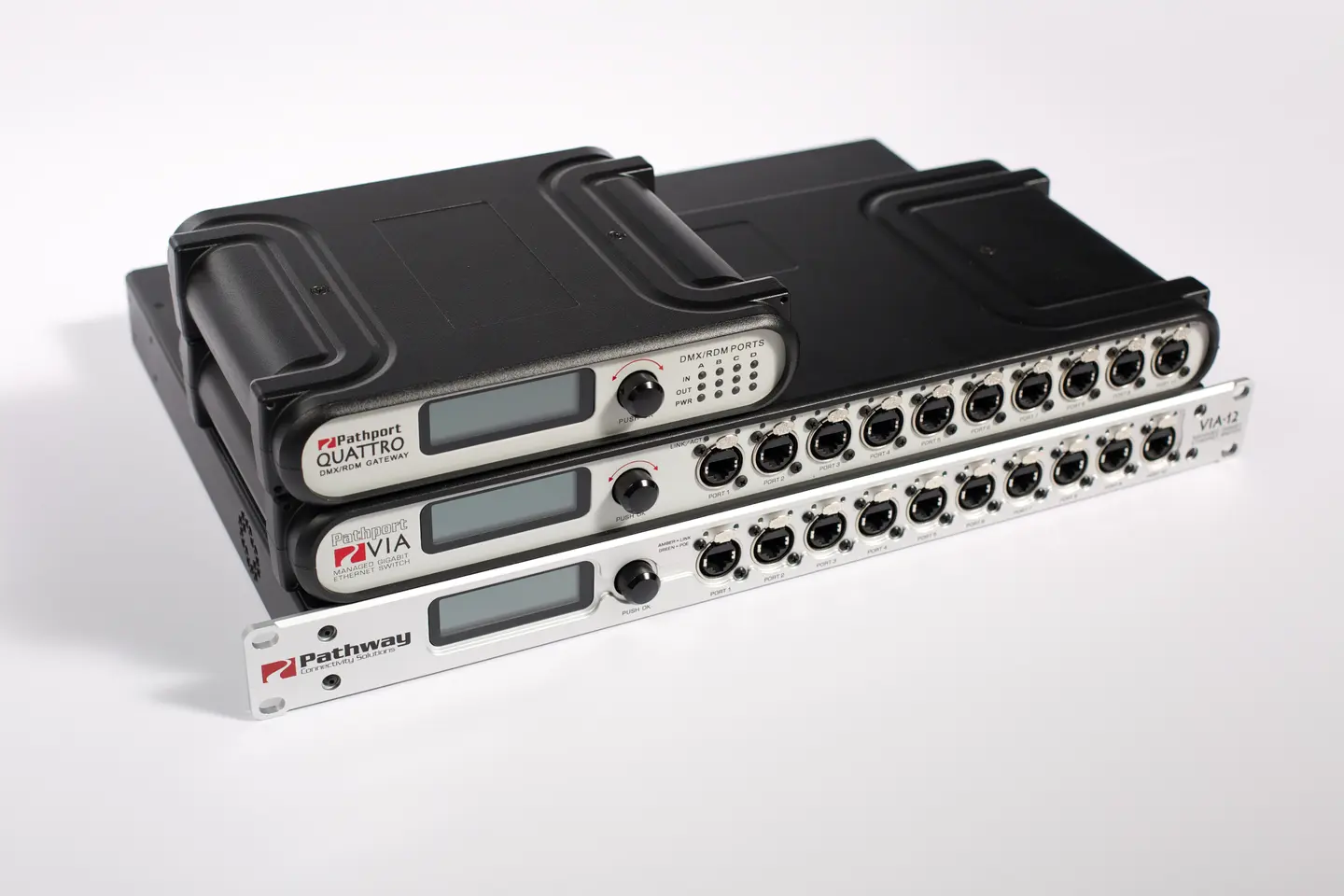
Our work with Pathway Connectivity, now part of Acuity Brands, has run across multiple products rather than a single project. That changes what industrial design is for.

Once the second product exists, the questions become structural: what is shared, what is unique, and what should a customer be able to assume before they read the manual.

Consistent design language

A recognisable family look that holds across form factors and generations.

Shared components

Common extrusions, brackets, trims and fasteners reused deliberately across the range.

Recognisable interfaces

Port layout, indication and labelling conventions a technician learns once.

Scalable architecture

A platform that accepts the next variant without a redesign.

Manufacturing efficiency

Fewer unique parts, shared suppliers and lower tooling spend per new product.

Brand continuity

Equipment that reads as one range in a rack full of other manufacturers.

Relevant Projects

One Client, Three Products, One Design Language

VIA-12 lighting network switch installed in an equipment rack

Pathway Connectivity / Acuity · Network Hardware

VIA-12

Challenge
A switch for entertainment lighting, sound and video signal distribution that works in both touring and permanent installations, with a dense rear face and no cooling noise.
Our role
Industrial design, enclosure and thermal strategy, port and indication layout, DFM and manufacturing support.
Why it matters
Purpose-built professional infrastructure hardware, designed for technicians in exactly the conditions the category demands.
View the VIA-12 Project
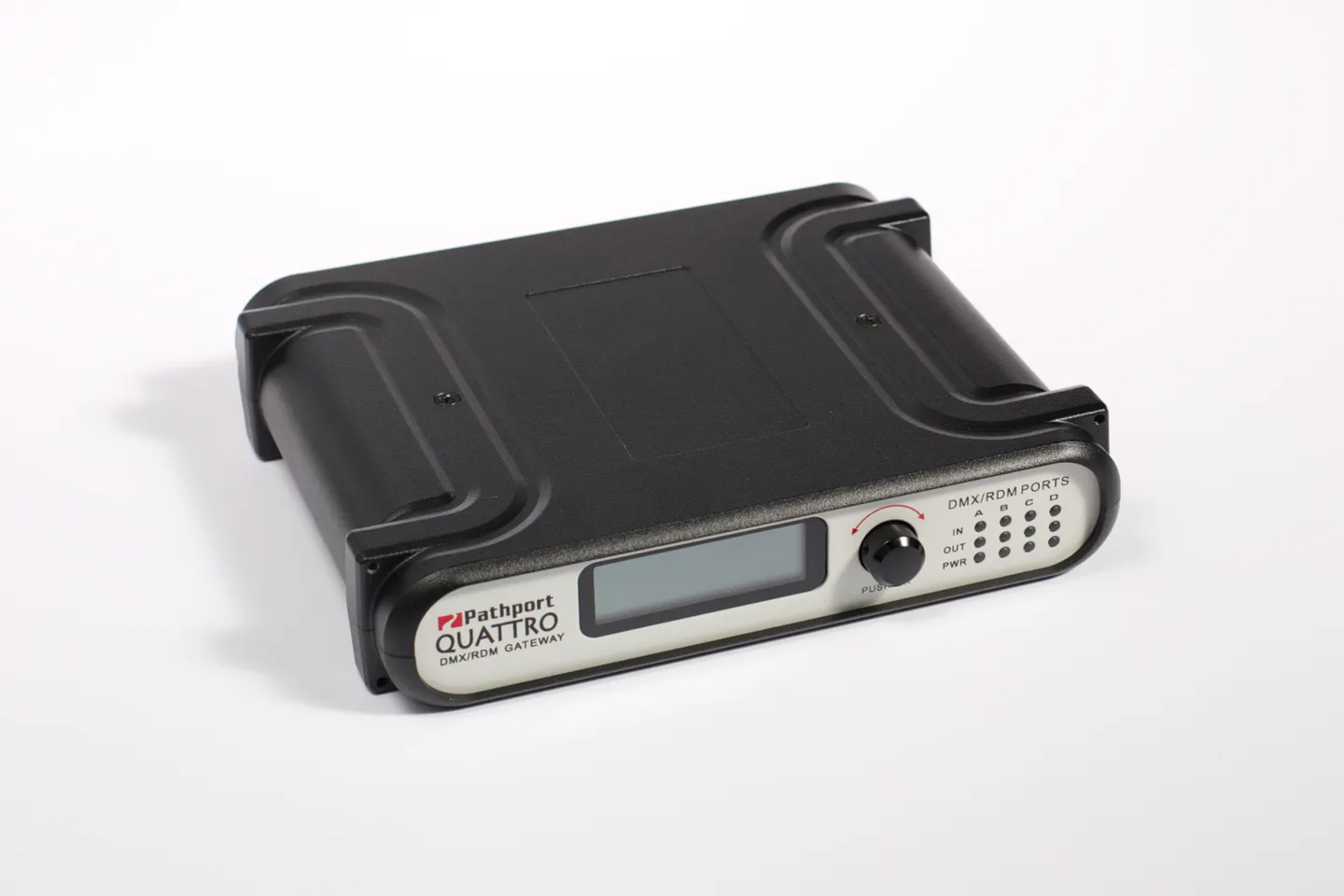
Quattro DMX gateway hardware for Pathway Connectivity

Pathway Connectivity / Acuity · Gateway

Quattro

Challenge
A compact gateway that had to sit alongside existing products in a rack and read as part of the same family.
Our role
Industrial design, housing and port layout, mounting variants and design for manufacture.
Why it matters
Shows the family logic working: a new product that inherits conventions rather than inventing new ones.
View the Quattro Project
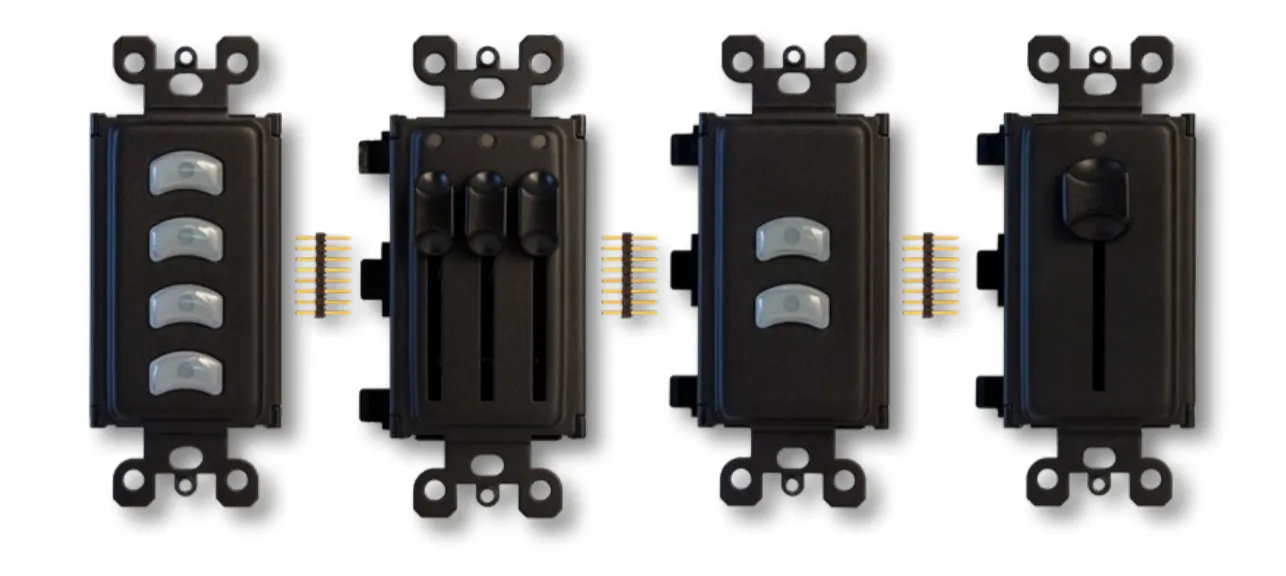
Vignette modular DMX wall station lighting control

Pathway Connectivity / Acuity · Architectural Controls

Modular Switches

Challenge
A modular wall-station system that could be configured for different installations while staying visually consistent on the wall.
Our role
Industrial design of the modular system, interface layout and manufacturing detail development.
Why it matters
Extends the same design language from the equipment room out to the wall, where the end user finally touches the system.
View the Modular Switches Project

FAQ

Commercial Hardware Questions We Are Asked First

Can you design rack-mount electronics?

Yes. Rack-format hardware is a core part of our commercial work, including front and rear face layout, mounting and internal packaging.

Can you work within an existing product family?

Yes. We have done exactly that across multiple products for the same client, adopting the existing language and tightening it where it helped.

Can you design around an existing PCB?

Yes, and where a small change to board outline or connector placement unlocks a better product, we will make the case for it with the trade-off stated.

Can you improve thermal performance through enclosure design?

Yes. Conduction paths, vent placement, material choice and internal airflow are enclosure design decisions, and passive cooling is usually the goal.

Can you design for touring and permanent installations?

Yes. Those are different duty cycles — repeated transport and re-patching versus a decade untouched — and we design for both explicitly.

Can you reduce enclosure manufacturing cost?

Yes. Usually through part consolidation, better process choice for the volume, and removing secondary operations.

Can you create wall-mount and rack-mount variants?

Yes. Planning variants from one core architecture is cheaper than designing each separately, and we set that up early.

Can you work with our internal engineering team?

Yes. Most of our commercial work is done as an extension of a client engineering group, inside their release process.

Can you support product-family development?

Yes — design language, shared components and the rules that keep future products consistent without freezing them.

Can you support production and supplier implementation?

Yes. Documentation, supplier reviews, first articles and support through initial production runs.

Let's Talk About Your Commercial Hardware

One product, a variant, or a whole family that needs to look and behave like one range. Tell us where the program is and we will tell you where we would start.

Book a Discovery Call